Tomb Raider: Legacy of Atlantis – A Deep Dive into the Genre-Defining Remake
Lara Croft changed how we play games. Her 1996 debut didn’t just sell copies; it built the blueprint for hits like Uncharted, Horizon, and the Star Wars Jedi series. Now, Tomb Raider: Legacy of Atlantis brings us back to where it all started. This isn’t just a HD polish. It is a full reimagining of the story that created the action-adventure genre.
We got a first look at the game through a demo full of water puzzles, cartwheels, and dinosaur fights. It feels familiar, but it has a fresh look and smart updates. The original game’s controls were famous for being stiff. Moving Lara back then felt like steering a giant ship. This remake fixes that problem.
This guide looks at how the developers are mixing old-school charm with new tools. We will look at the new movement, the updated puzzles, and how this story fits into the wider series.
PRE-ORDER NOW
The Evolution of Lara Croft’s Movement
The original Tomb Raider was a struggle for many players. Lara moved in blocks, and her turning circle was huge. If you try to play the PS1 version now, you will feel how heavy she is. Tomb Raider: Legacy of Atlantis changes this completely. Crystal Dynamics and Flying Wild Hog made Lara light on her feet.
She feels nimble now. Her jumps have a bit of a floaty feel, almost like Princess Peach. It takes a minute to get used to. If you played the recent Survivor trilogy, you are used to Lara sticking to walls like glue. This version is different. It stays closer to the old-school feel while removing the frustration.
The goal here is to make you feel like you are actually exploring. You aren’t just following a set path. The freer movement lets you poke around the environment. It makes the world feel less like a hallway and more like a real place.
Reimagined Puzzles and Exploration in Tomb Raider: Legacy of Atlantis
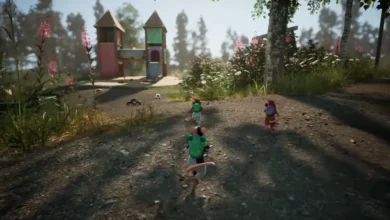
The demo dropped us into a jungle area with classic cog and water puzzles. We have seen these types of riddles for decades, but they feel new again. The game uses a sandbox approach. You have to climb, swim, and grapple to find missing parts to open giant gates.
The biggest change is the new wrist grapple. Lara can fire it out like Spider-Man. This tool makes old puzzles move faster. It adds a layer of verticality that the original game never had. It shows that the developers want this to be more than a simple remake.
Exploration is also deeper now. Lara has a scanner to find secrets in the brush. The game is mostly linear, but going off the path pays off. You can find:
- Lore documents about ancient people.
- Hidden objects that give you skill points.
- Environmental clues that tell a story.
There is also a skill tree. While it was locked in the demo, its presence means you can customize Lara’s abilities. This adds a level of depth the 1996 version lacked.
A Connected Universe: Narrative and Lore
Tomb Raider: Legacy of Atlantis is a retelling of the first story. However, it is not a standalone reboot. It exists in the same universe as the prequel trilogy from 2013 to 2018. This means this Lara already has some experience. She isn’t a total amateur.
This connection makes sense for the gameplay. She already knows how to fight and survive. You can see this in how she handles herself in the wild. The game uses documents to fill in the gaps. These notes help build a richer history for the civilizations Lara visits.
By linking the games, the developers give Lara a more consistent history. You get the nostalgia of the first adventure but the polish of a seasoned character.
Modernized Combat and Iconic Encounters
Combat is where the new changes really shine. We fought a group of hungry velociraptors in the demo. The fight felt snappy. Lara can dodge, cartwheel, and backflip to avoid attacks. When you get enough space, you can use her iconic double pistols. The ammo is unlimited, so you can keep the pressure on.
The best part of the fight is the Focus System. As you dodge and move, a meter fills up. Once it is full, you can trigger a “bullet time” effect. Lara spins into the air and time slows down. This lets you pick off enemies with perfect aim. It feels like a mix of classic shooting and modern action cinema.
Then comes the T-Rex. In the original game, this was a basic shooting match. In Tomb Raider: Legacy of Atlantis, it is a cinematic event. It starts with a playable chase. You slide, swing, and climb to stay away from the dinosaur’s mouth.
The use of slow motion makes the scene feel dangerous. You can hear the panic in Lara’s voice, played by Alex Wilton Regan. It turns a simple fight into a high-stakes escape.
Final Thoughts on the Remake
Tomb Raider: Legacy of Atlantis looks like a winner. It knows exactly what it wants to be. It keeps the spirit of the original exploration but adds the combat and movement we expect in 2027. The blend of old-school puzzles and new tools like the grapple works well.
The game has all the right pieces. It respects the past without being trapped by it. If you want to get ready for this release, try playing the Survivor trilogy. It will help you understand where this version of Lara fits in the timeline.
Tomb Raider: Legacy of Atlantis hits stores on February 12th, 2027. It will be on PS5, Xbox Series X/S, PC, and Nintendo Switch. It looks like a great way to experience the magic of the Peruvian jungles all over again.